Russia is a land where history and modernity intertwine, creating a realm of contrasts and boundless opportunities. Studying in Russia goes beyond earning a degree—it is a journey into a rich cultural depth and a brilliant scientific heritage. Throughout history, Russia has been the birthplace of eminent scientists and literary giants. From Mendeleev in chemistry to Pushkin in literature, from Chekhov in storytelling to Pavlov in physiology, this country has consistently pioneered advancements in science and culture. From the prestigious Moscow State University to the advanced research centers of St. Petersburg, Russia is an exceptional destination for students.
In this article, we will guide you through various aspects of Russia’s educational system, including the cost of studying in the country. Be sure to read until the end to unlock the door to an exciting future in Russia.
Study migration to Russia
Studying in Russia offers an exceptional opportunity for international students. The country, with its rich scientific and cultural history, is now home to globally recognized universities. Pursuing education in Russia comes with numerous advantages, including relatively low tuition and living costs, high-quality instruction—particularly in science, engineering, and medicine—and diverse opportunities for research and innovation. Many Russian universities offer English-taught programs, but learning the Russian language can provide a deeper cultural immersion experience.
Studying at various levels in Russia
Russia offers high-quality and affordable education from primary school to doctoral studies. A wide range of disciplines, including medicine and engineering, are available in both English and Russian. Students are permitted to work during their studies and have access to employment opportunities after graduation. In the following sections, we will explore studying at different academic levels in Russia in comprehensive detail.
Studying in Russian schools

The Russian education system consists of three stages: primary, lower secondary, and upper secondary. Education in Russia begins at ages 6-7 and continues until age 15. Public schools are tuition-free, while private and international schools are also available at higher costs. Upon completing upper secondary education, students must take the Unified State Examination (EGE). Studying in Russian schools can open new horizons for students, providing diverse academic and career opportunities. The academic year in Russia runs from September 1st to May 25th.
Studying for a Bachelor’s Degree in Russia
Pursuing a bachelor’s degree in Russia presents a valuable opportunity for international students seeking high-quality and affordable education. Undergraduate programs typically span four years and include both foundational and specialized courses. Russian universities offer over 50 fields of study, ranging from traditional disciplines like medicine and engineering to emerging fields such as artificial intelligence.
Key advantages of studying in Russia include:
- Low tuition and living costs compared to Western countries.
- Numerous government-funded scholarships.
- No requirement for rigorous entrance exams.
- Globally recognized degrees and accredited universities.
These factors make Russia an attractive destination for international students, as it provides the chance to study in their preferred field at an affordable cost within a high-standard educational environment.
Master’s degree study in Russia
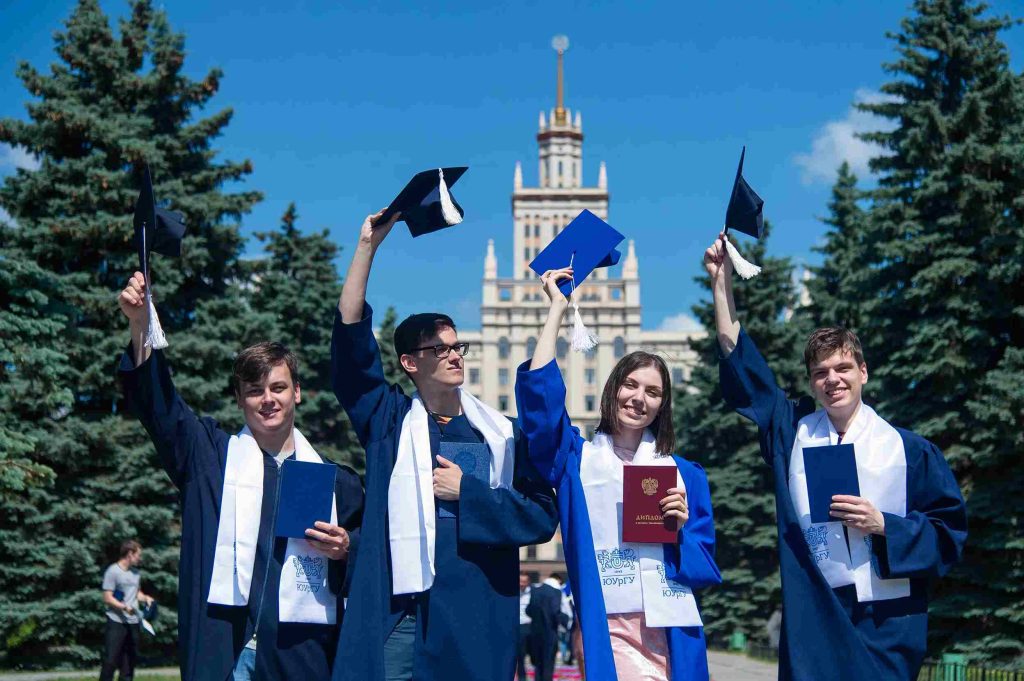
Russia offers unique opportunities to earn a globally recognized master’s degree in an advanced and modern environment. One of the key attractions of studying in Russia is its affordable tuition and living costs, making it an ideal choice for students.
Russia is particularly renowned for its engineering and health sciences programs. However, a wide range of disciplines is also available, including management, finance, Eurasian studies, design, information technology, and economics. To find a suitable program, students can use online search tools to explore the diverse options available.
Pursuing a master’s degree in Russia is a cost-effective educational pathway. The program typically lasts two years, and students are permitted to work during their studies.
Studying a PhD in Russia
Pursuing a PhD in Russia represents the third level of higher education. This program typically spans 2-3 years and involves research, coursework, and practical activities. Upon successful defense of their dissertation, students are awarded a PhD degree. Scholarships are also available for doctoral studies in Russia.
For admission, applicants must pass entrance examinations and possess published ISI-indexed articles. Admission requirements are relatively accessible, and it is possible to enroll without a language proficiency certificate. PhD students are permitted to work during their studies, and after graduation, they may qualify for a work visa and permanent residency. For the student visa, required documents include a passport, university invitation letter, and health certificate.
Studying Medicine in Russia
Studying medicine in Russia is one of the top educational destinations in the world. Key advantages include high-quality education, low costs, no entrance exams or language proficiency requirements, and globally recognized degrees. The general medicine program in Russia lasts 6-7 years and is available in both English and Russian.
Among the top universities for medical studies in Russia are Sechenov University, Pirogov Medical University, St. Petersburg State Medical University, Pavlov University, and Kazan Federal University. These institutions offer various medical disciplines, including general medicine, dentistry, pharmacy, and specialized fields.
After graduating in medicine, you can stay in Russia for up to 180 days to seek employment. The income of doctors in Russia varies by specialization and can reach up to $80,000 per year.
Study Dentistry in Russia
The dentistry program in Russia is a 5-year course, and graduates with a high school diploma are eligible to apply. Admission is based on entrance exam results. The annual tuition fee for dentistry studies in Russia ranges from $2,500 to $11,800.
Admission requirements include completing high school with a minimum overall score of 50-60% and strong grades in biology and chemistry, as well as proficiency in English. Prominent universities for dentistry studies in Russia include Pirogov Medical University, RUDN University, Pavlov University, and Sechenov University. Students can benefit from Russian government scholarships, which cover full tuition and accommodation costs.
Conditions for studying in Russia
To study in Russia, you must first select your desired field and university. Required documents include a valid passport, academic transcripts, educational certificates, and a high school diploma. For master’s programs, a 4-year bachelor’s degree and a high school diploma are required. For PhD programs, a bachelor’s and master’s degree in a relevant field are necessary.
For medical programs, applicants must have strong grades in biology, chemistry, and physics. For engineering, mathematics and physics are essential. For other fields such as economics or arts, only a high school diploma is sufficient. For specialized medical programs, a general medicine degree is required. For a medical PhD (e.g., residency or research-based programs), additional documents such as internship and residency certificates are also necessary.
Documents required to study in Russia
The documents required for a Russian student visa application include the following:
- Valid Passport: Original and copy of the passport with a minimum validity of 12 months from the date of entry into Russia.
- Official Invitation Letter: Admission letter issued by an accredited higher education institution in the Russian Federation.
- Completed Forms: Fully and accurately filled visa application forms.
- Photographs: Two color passport-sized photographs (3.5 × 4.5 cm) with a white background. The photos must be recent and comply with the embassy’s specifications.
- Health Certificate: HIV (AIDS) test results confirming a negative status.
Age requirements for studying in Russia
Russia imposes no age restrictions for student admissions in higher education. Applicants must have completed general secondary or vocational education and provide valid credentials. These documents must meet specific standards. Documentation requirements depend on the university and program applied to. The only necessity is for applicants to pass entrance examinations, and studying in Russia does not require a language proficiency certificate.
Minimum GPA for studying in Russia
In the Russian education system, university admissions are typically based on entrance exam scores rather than grade point averages (GPA). Russian universities primarily consider the results of standardized international exams and interviews for admitting international students. However, some specific fields of study may have additional requirements.
Nevertheless, the overall admission system in Russia is significantly more flexible than in many countries, offering opportunities to students with diverse academic backgrounds. This approach enables a broader range of applicants to access higher education.
Advantages and disadvantages of studying in Russia

Studying in Russia offers compelling opportunities, including high-quality education, relatively low costs, and cultural diversity. However, challenges such as extreme cold, language barriers, and cultural differences also exist. Students must be prepared to adapt to a new environment. Nevertheless, this experience can open new horizons and build valuable skills.
Fortunately, solutions like utilizing student dormitories and obtaining part-time work permits are available to Iranian students. Overall, the advantages of studying in Russia outweigh the disadvantages, and many challenges are manageable.
Key advantages of studying in Russia include:
- Straightforward student visa process
- Universities recognized by Iranian ministries
- Education at world-class institutions
Disadvantages of studying in Russia include:
- Cold climate
- High housing costs in Moscow, the capital
Study in Russia with a diploma
Studying in Russia with a high school diploma is an excellent opportunity for Iranian students. Admission to Russian universities requires only a valid high school diploma, a student visa, and the necessary documentation. Additionally, the absence of entrance exams, the availability of preparatory courses (e.g., Podgotovitelny Fakultet or Paдфак) to strengthen language skills, and the overall affordability of tuition and living costs are significant advantages of studying in Russia. While expenses vary depending on the field of study and institution, they remain relatively reasonable compared to many Western countries.
Cost of studying in Russia
Studying in Russia offers exceptional affordability alongside high-quality education. With its globally recognized universities, the country is an attractive destination for higher education. Tuition fees in Russia are relatively low compared to many Western countries, though they vary significantly depending on the university, field of study, and degree level.
In addition to tuition, students should account for living expenses, health insurance, and occasionally preparatory language courses. Below is an approximate breakdown of annual tuition costs in Russia:
- Bachelor’s Degree: $3,000 – $5,000
- Master’s Degree: $3,000 – $7,000
- PhD: $3,000 – $7,000
- Medicine: $2,000 – $12,000
- Dentistry: $2,000 – $12,000
Is it better to study in Russia or Türkiye?
Both countries offer affordable educational options for international students. In Turkey, tuition fees at public universities range from 500 to 4,000 EUR per year, while in Russia, most programs cost less than 5,000 EUR annually.
Turkey boasts highly ranked universities with strong reputations, whereas Russia is actively working to improve its university rankings and place them within the top 100 globally.
For admissions, Russia does not require entrance exams for most programs, while Turkey has made the national MYOS exam mandatory since November 2021.
Regarding work during studies:
In Russia, there is no hourly limit for student work, but a work permit is still required.
In Turkey, students can work up to 20 hours per week.
Comparison of Russian and Turkish universities
Below you can see a comparison table of the top universities in Türkiye and Russia:
| World ranking | Türkiye | World ranking | Russia | National ranking |
| 336 | Middle East Technical University | 87 | Moscow State University | 1 |
| 404 | Istanbul Technical University | 315 | Saint Petersburg State University | 2 |
| 431 | Cook University | 319 | Bauman Moscow State Technical University | 3 |
| 502 | Bilkent University | 342 | Peoples’ Friendship University of Russia | 4 |
| 514 | Baghazici University | 396 | Kazan Federal University | 5 |
| 526 | Sabanci University | 399 | Higher School of Economics | 6 |
| 711-720 | Istanbul University | 415 | Moscow Institute of Physics and Technology | 7 |
| 761-770 | Hajat Tepe University | 418 | Tomsk State University | 8 |
| 901-950 | Ankara University | 421 | Novosibirsk State University | 9 |
| 951-1000 | Yildiz Technical University | 461 | National University of Nuclear Research | 10 |
Studying in Russia without a language certificate
Russia offers the opportunity to study without a language proficiency certificate. Students can pursue their education in either Russian or English. For studies in Russian, many universities do not require a language certificate or completion of a preparatory course (Podgotovitelny Fakultet or Paдфак). This flexibility has expanded educational opportunities for international students, making Russia an attractive destination for foreign learners.
Working while studying in Russia

International students are permitted to work during their leisure hours at the university or its affiliated organizations. In some cases, international offices of universities assist students in securing contractual employment, in which case a permit from the Main Directorate for Migration of the Ministry of Internal Affairs of Russia is not required. In all other instances, such a permit is necessary. Permits are issued exclusively to full-time students enrolled at accredited state universities.
Due to the intensity of academic programs and the challenges associated with coursework, students have limited free time for employment. It is advisable for families to provide financial support to the student, or for a sufficient amount of savings to be set aside, to enable the student to focus entirely on their studies.
Conclusion
Studying in Russia presents a unique opportunity to experience a rich cultural heritage and a high-quality education system. Accredited Russian universities offer a wide range of academic programs at reasonable costs. The key advantages of pursuing education in Russia include high instructional standards, relatively low tuition fees, and the possibility of enrollment without mandatory entrance examinations.
Prospective students can gain admission to Russian universities without an existing language proficiency certificate and can enhance their linguistic skills through dedicated preparatory programs (Podgotovitel’ny Fakultet or Foundation Courses). Furthermore, international students are permitted to work during their studies under certain conditions.
Challenges associated with living in Russia may include the severe winter climate and cultural adjustments. However, the overall benefits of studying in Russia, coupled with the esteemed quality of its universities, generally outweigh these drawbacks.
FAQ
Is it possible to obtain Russian residency and a Russian passport by studying in Russia?
Yes, according to the new federal law of the Russian Federation enacted in 2023, international students can obtain temporary residence permits (TRP) while pursuing their studies. Upon completion of their education, they become eligible to apply for permanent residence. Following this, through the successful completion of subsequent procedures, they may ultimately acquire Russian citizenship.
What are the conditions for student residence in Russia?
Students on a student visa are permitted to reside in Russia for the duration of their academic program. They are required to renew their visa annually and may reside in either university dormitories or private rental accommodations.
What are the most popular majors in Russia?
Engineering, medicine, computer science, economics, international relations, Russian language and literature, and arts are among the most popular fields of study for international students in Russia.
Are there scholarships for foreign students in Russia?
Yes, the Russian government and some universities offer scholarships for international students. These scholarships typically include tuition fee waivers, living stipends, and sometimes health insurance coverage.
How much does it cost to live as a student in Russia?
The cost of student living in Russia varies significantly by city. In Moscow and St. Petersburg, students should budget approximately $300 to $800 per month to cover accommodation, food, and other essential expenses.
What is the grading and evaluation system like in Russian universities?
The grading system typically ranges from 2 (“Unsatisfactory”) to 5 (“Excellent”). Written and oral examinations are common forms of assessment. Class attendance is considered important, and participation in research projects often constitutes a component of the overall evaluation.
Leave a Reply